5 年肝癌发生率从 15% 降至 1%!聚乙二醇干扰素α为何是慢乙肝患者预防肝癌的关键武器
作者:唐昧 栏目:新闻 来源:中国经济观察网 发布时间:2026-09-10 10:45 阅读量:18238
内容摘要:原发性肝癌是我国高发且致死率极高的恶性肿瘤。最新全球癌症数据显示,2024年全球肝癌新发人数约84.3万,死亡73.2万;而我国新发人数高达35.4万,死亡30.4万,发病及死亡人数均占全球近一半[1,2]。在这背后,HBV感染是最主要的病...原发性肝癌是我国高发且致死率极高的恶性肿瘤。最新全球癌症数据显示,2024 年全球肝癌新发人数约 84.3 万,死亡 73.2 万;而我国新发人数高达 35.4 万,死亡 30.4 万,发病及死亡人数均占全球近一半 [1,2]。在这背后,HBV 感染是最主要的病因——中国超 83.8% 的肝癌由 HBV 导致 [3],HBV 相关肝癌发病数占全球总数的 69%[4]。面对如此沉重的疾病负担,预防肝癌成为乙肝治疗的最终目标。聚乙二醇干扰素α(PegIFNα)作为目前乙肝临床治愈的基石药物,亦被多项临床研究证实是慢乙肝患者预防肝癌的最佳选择,究其内在机制源于它独特的四重防肝癌的关键作用,能在多个层面实现对肝癌的阻断。今天,我们就来一探究竟。
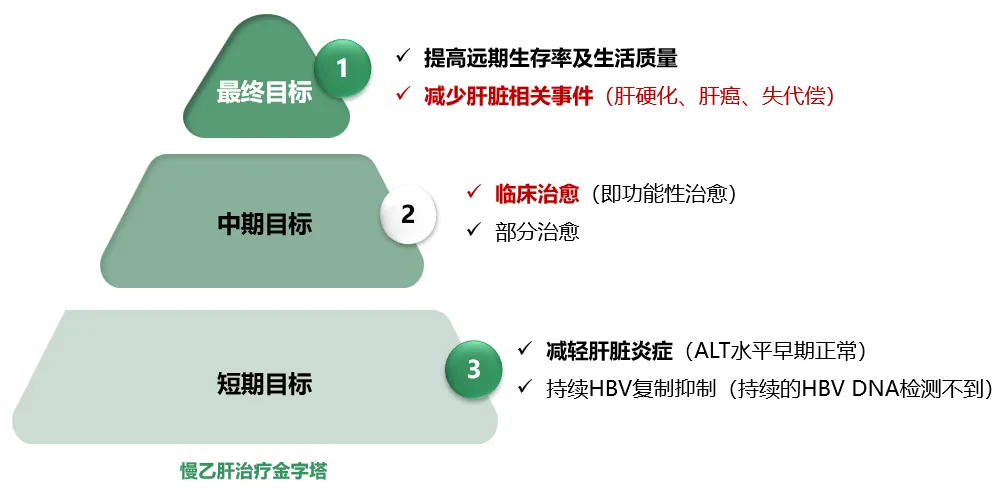
慢乙肝治疗金字塔 [5]
一、慢乙肝患者发生肝癌的关键机制
HBV 感染可能通过多种机制导致肝癌发生,分为直接机制和间接机制。
直接机制主要包括 HBV DNA 整合及病毒蛋白的持续表达。
HBV 整合: 导致肝癌发生的主要分子机制。HBV DNA 整合至宿主基因组,导致基因组不稳定和突变、致癌基因激活 [6];
HBx 和 HBs 等病毒蛋白持续表达:HBx 是 HBV 诱导肝癌发生的核心效应蛋白。它可通过多条途径协同驱动肝细胞恶性转化,导致肝癌发生:包括通过表观遗传调控激活原癌基因、抑制抑癌基因;通过促进非编码 RNA 的表达引发细胞免疫通路的失调等 [7]。而 HBsAg 可通过诱导细胞增殖、引发内质网应激、抑制免疫应答等机制推动肝癌发生 [8]。HBsAg 水平升高与肝癌风险增加相关,且随着 HBsAg 水平升高,男性肝癌风险的增长速度明显高于女性 [9]。
间接机制则是肝脏慢性炎症: 慢性 HBV 感染引发持续的肝脏炎症,导致肝细胞反复坏死与再生、肝星状细胞(HSCs)异常活化,推动肝纤维化乃至肝硬化的发展 [10]。
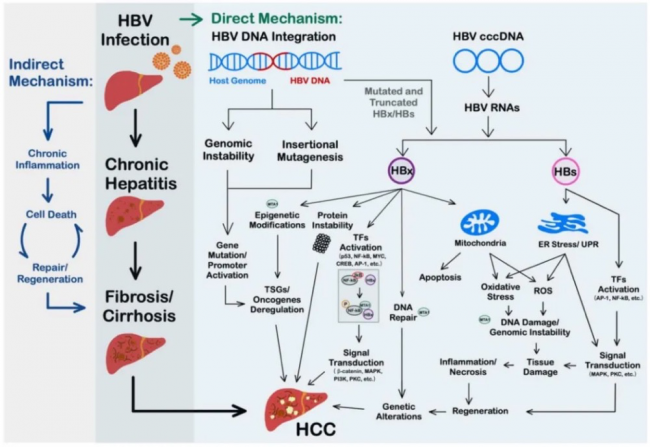
HBV 相关肝癌的发生机制 [11]
二、PegIFNα预防肝癌的四重机制
PegIFNα之所以能成为预防肝癌的「利器」,在于它不仅能直接抗病毒,还能通过其独有的免疫调节、改善肝组织学及直接抗肿瘤作用,实现对肝癌发生路径的有效阻断。
1. 直接抗病毒:从源头减少 HBV 整合和病毒蛋白的表达
IFNα通过 JAK-STAT 信号通路调控 500 余个干扰素刺激基因(ISGs),几乎靶向病毒入侵、复制、组装和释放的全过程,显著降低 HBV DNA、RNA 水平,并下调 HBsAg、HBx 等致癌蛋白的表达 [12,13]。更为关键的是,它能抑制 HBV cccDNA 的复制并诱导其降解,从源头上减少新的 HBV 整合 [14,15]。同时,ISGs(如 TRIM 家族)还能直接靶向 HBx 蛋白,促进其降解或功能丧失 [16]。多维度阻断病毒复制,降低肝癌发生风险。
临床研究显示,基于 PegIFNα治疗获得临床治愈的慢乙肝患者中,27% 实现了肝内 cccDNA 清除 [17]。同时,HBV 整合数量,尤其是肝癌驱动基因中转录活跃的整合事件显著低于未治愈组 [18]。
2. 免疫调节:清除受感染的肝细胞
PegIFNα具有强大的免疫调节作用 [19],可通过激活广泛、系统的先天及适应性免疫,提升抗原呈递,特异性、持久的清除受感染的肝细胞,从而阻断疾病进展。
核苷(酸)类似物(NAs)虽能抑制病毒复制,但治疗 10 年后肝内 HBV 整合事件数仍处于高位 [20],这可能正是 NAs 治疗可降低肝癌发生风险但作用有限的原因之一。而 PegIFNα的免疫调节作用恰恰能解决这一问题:它激活的 HBV 特异性 CD8+ T 细胞,可以识别并清除这些携带整合 DNA 片段的克隆性扩增肝细胞,从而预防肝癌发生 [21]。
3. 改善肝组织学:逆转肝脏炎症及肝纤维化
PegIFNα具有直接抗纤维化作用,可通过抗增殖和促凋亡活性调节肌成纤维母细胞样肝星状细胞的数量 [22],并下调胶原蛋白(如 COL1A2)的转录 [23],促进肝纤维化的消退。
多项临床研究证实,PegIFNα治疗可显著改善肝脏炎症和纤维化 [24,25],且效果明显优于 NAs 单药治疗 [26]。阻断了纤维化的进展,也就切断了肝癌演变的重要通路。
4. 直接抗肿瘤:多途径抑制肿瘤进展
这是 PegIFNα区别于其他抗病毒药物的独特优势,也是其预防肝癌的最后一道防线:
促进肿瘤细胞凋亡:PegIFNα可剂量依赖性地诱导肿瘤细胞凋亡 [27]。
抑制肿瘤细胞增殖:PegIFNα可上调肿瘤抑制因子 p53 的表达,诱导细胞周期阻滞或凋亡 [28]。
抑制肿瘤细胞迁移与侵袭:IFNα可下调基质金属蛋白酶-9(MMP9)的表达,抑制肿瘤细胞的迁移和侵袭 [29]。
抑制肿瘤血管生成:IFNα可抑制血管内皮生长因子(VEGF)的合成与分泌,抑制肿瘤血管生成,降低微血管密度 [30]。
重塑肿瘤微环境:IFNα信号通路不仅可增强免疫效应细胞的功能,还能调控各种免疫抑制细胞,重塑肿瘤细胞表型,实现对肿瘤免疫逃逸的多维干预,增强抗肿瘤免疫应答 [31]。
三、临床验证:PegIFNα是慢乙肝患者预防肝癌的最佳选择
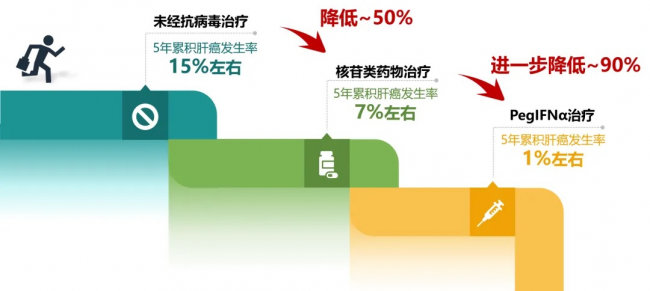
理论机制得到了大量临床数据的强力支撑。多项研究显示,慢乙肝患者接受基于 PegIFNα的治疗,可在 NAs 的基础上进一步降低约 90% 的肝癌发生风险 [32],5 年累积肝癌发生率降至 1% 左右 [33,34]。
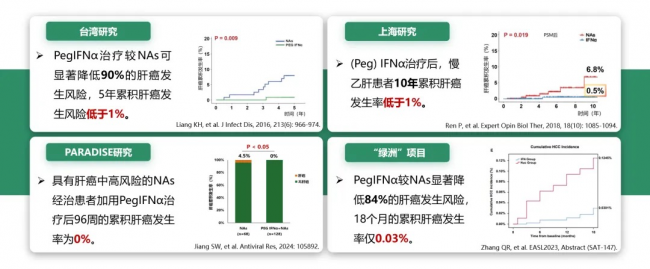
获得 HBsAg 清除的患者,5 年累积肝癌发生率同样低至 1% 左右 [35-37],且 HBsAg 清除时间每增加 1 个月,肝癌发生风险降低 3.8%,全因死亡风险降低 0.9%[38]。50 岁前获得 HBsAg 清除的无肝硬化患者肝癌发生率降至与普通人群一样 [39]。
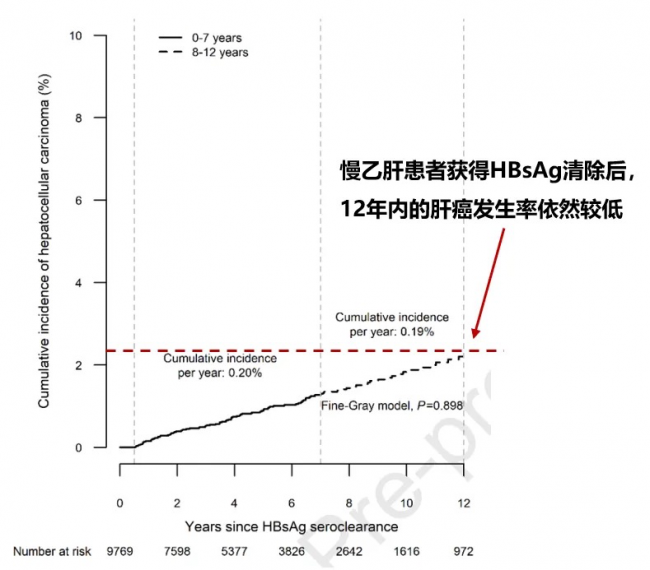
慢乙肝患者获得 HBsAg 清除后 12 年的肝癌累积发生率 [37]
四、总结
HBV 持续感染引发的肝脏慢性炎症,逐步进展为肝纤维化、肝硬化;与此同时,HBV 整合及 HBx、HBsAg 等病毒蛋白的持续表达进一步驱动遗传变异、干扰细胞稳态,共同导致肝癌的发生发展。
PegIFNα可通过「直接抗病毒、免疫调节、改善肝组织学、直接抗肿瘤」四重机制,实现多靶点协同干预,有效阻断肝癌的发生路径。它不仅是强效的抗病毒药物,更是目前预防 HBV 相关肝癌的最佳选择。PegIFNα治疗慢乙肝患者,可在 NAs 的基础上进一步降低约 90% 的肝癌发生风险,5 年累积肝癌发生率降至 1% 左右。
无论是否获得 HBsAg 清除,PegIFNα治疗均可最低化肝癌发生风险。对于获得 HBsAg 清除的患者,HBsAg 清除持续时间越长,远期不良结局风险越低。因此,慢乙肝患者应选择合适的治疗策略,积极追求临床治愈,最低化肝癌发生风险。
参考文献:
[1] Sung H, Filho AM, Laversanne M, et al. Global cancer statistics 2024: GLOBOCAN estimates of incidence and mortality worldwide for 34 cancers in 186 countries[J]. CA Cancer J Clin, 2026, 76(4): e70090.
[2] 孙可欣, 李荔, 王少明, et al. 2024 年中国分地区恶性肿瘤流行情况分析 [J]. 中华肿瘤杂志, 2026, 48(3): 400-412.
[3] 秦叔逵,中国原发性肝癌临床登记调查(CLCS)的中期报告,2020 CSCO.
[4] de Martel C, Georges D, Bray F, et al. Global burden of cancer attributable to infections in 2018: a worldwide incidence analysis[J]. Lancet Glob Health, 2020, 8(2): e180-e190.
[5] 尤红, Rakhi Maiwall, 陈静, et al. 亚太肝病学会(APASL)慢性乙型肝炎管理临床实践指南:2026 年版 [J]. 中华肝脏病杂志, 2026, 34(7):640-667.
[6] Zheng KY, Jiang AM, Li ZR, et al. Bridging viral hepatitis and liver cancer: Emerging concepts in pathogenesis and therapeutic innovation[J]. Clinical and Translational Discovery, 2025, 5(3): 30.
[7] Schollmeier A, Glitscher M, Hildt E. Relevance of HBx for Hepatitis B Virus-Associated Pathogenesis[J]. Int J Mol Sci, 2023, 24(5).
[8] Hao B, Liu Y, Wang B, et al. Hepatitis B surface antigen: carcinogenesis mechanisms and clinical implications in hepatocellular carcinoma[J]. Exp Hematol Oncol, 2025, 14(1): 44.
[9] Yang Y, Gao J, Li HL, et al. Dose-response association between hepatitis B surface antigen levels and liver cancer risk in Chinese men and women[J]. Int J Cancer, 2016, 139(2): 355-362.
[10] You H, Wang X, Ma L, et al. Insights into the impact of hepatitis B virus on hepatic stellate cell activation[J]. Cell Commun Signal, 2023, 21(1): 70.
[11] Li YT, Wu HL, Liu CJ. Molecular Mechanisms and Animal Models of HBV-Related Hepatocellular Carcinoma: With Emphasis on Metastatic Tumor Antigen 1[J]. Int J Mol Sci, 2021, 22(17).
[12] Li Q, Sun B, Zhuo Y, et al. Interferon and interferon-stimulated genes in HBV treatment[J]. Front Immunol, 2022, 13: 1034968.
[13] Raftery N, Stevenson NJ. Advances in anti-viral immune defence: revealing the importance of the IFN JAK/STAT pathway[J]. Cell Mol Life Sci, 2017, 74(14): 2525-2535.
[14] Yang Z, Sun B, Xiang J, et al. Role of epigenetic modification in interferon treatment of hepatitis B virus infection[J]. Front Immunol, 2022, 13: 1018053.
[15] Lucifora J, Xia Y, Reisinger F, et al. Specific and nonhepatotoxic degradation of nuclear hepatitis B virus cccDNA[J]. Science, 2014, 343(6176): 1221-1228.
[16] Wang F, Song H, Xu F, et al. Role of hepatitis B virus non-structural protein HBx on HBV replication, interferon signaling, and hepatocarcinogenesis[J]. Front Microbiol, 2023, 14: 1322892.
[17] Gan W, Gao N, Gu L, et al. Reduction in Intrahepatic cccDNA and Integration of HBV in Chronic Hepatitis B Patients with a Functional Cure[J]. J Clin Transl Hepatol, 2023, 11(2): 314-322.
[18] Gao N, Guan G, Xu G, et al. Integrated HBV DNA and cccDNA maintain transcriptional activity in intrahepatic HBsAg-positive patients with functional cure following PEG-IFN-based therapy[J]. Aliment Pharmacol Ther, 2023, 58(10): 1086-1098.
[19] Zhao Q, Liu H, Tang L, et al. Mechanism of interferon alpha therapy for chronic hepatitis B and potential approaches to improve its therapeutic efficacy[J]. Antiviral Res, 2024, 221: 105782.
[20] Chow N, Wong D, Lai CL, et al. Effect of Antiviral Treatment on Hepatitis B Virus Integration and Hepatocyte Clonal Expansion[J]. Clin Infect Dis, 2023, 76(3): e801-e809.
[21] 周召, 阿卜杜热西提·阿卜来提, 顾智强, et al. 尽早启动抗病毒治疗降低慢性 HBV 感染者肝细胞癌发生风险 [J]. 临床肝胆病杂志, 2023, 39(01): 31-36.
[22] Ogawa T, Kawada N, Ikeda K. Effect of natural interferon α on proliferation and apoptosis of hepatic stellate cells[J]. Hepatol Int, 2009, 3(3): 497-503.
[23] Inagaki Y, Nemoto T, Kushida M, et al. Interferon alfa down-regulates collagen gene transcription and suppresses experimental hepatic fibrosis in mice[J]. Hepatology, 2003, 38(4): 890-899.
[24] Liu T, Sun Y, Zhou J, et al. On-treatment changes of serum Wisteria floribunda agglutinin-positive Mac-2 binding protein are associated with the regression of liver fibrosis in chronic hepatitis B patients on interferon α add-on therapy[J]. J Med Virol, 2019, 91(8): 1499-1509.
[25] Li G, Zhang Q, Yu Y, et al. Histological responses of peginterferon alpha add-on therapy in patients with chronic hepatitis B with advanced liver fibrosis after long-term nucleos(t)ide analog treatment[J]. J Viral Hepat, 2019, 26 Suppl 1: 50-58.
[26] Liang H, Zheng X, Liu Y, et al. Effects of Different Antiviral Treatments on Liver Inflammation and Fibrosis in Patients With Chronic Hepatitis B[J]. J Viral Hepat, 2025, 32(4): e70019.
[27] Yano H, Ogasawara S, Momosaki S, et al. Growth inhibitory effects of pegylated IFN alpha-2b on human liver cancer cells in vitro and in vivo[J]. Liver Int, 2006, 26(8): 964-975.
[28] Hagiwara S, Kudo M, Nakatani T, et al. Combination therapy with PEG-IFN-alpha and 5-FU inhibits HepG2 tumour cell growth in nude mice by apoptosis of p53[J]. Br J Cancer, 2007, 97(11): 1532-1537.
[29] Liu Z, Dou C, Jia Y, et al. RIG-I suppresses the migration and invasion of hepatocellular carcinoma cells by regulating MMP9[J]. Int J Oncol, 2015, 46(4): 1710-1720.
[30] von Marschall Z, Scholz A, Cramer T, et al. Effects of interferon alpha on vascular endothelial growth factor gene transcription and tumor angiogenesis[J]. J Natl Cancer Inst, 2003, 95(6): 437-448.
[31] Holicek P, Guilbaud E, Klapp V, et al. Type I interferon and cancer[J]. Immunol Rev, 2024, 321(1): 115-127.
[32] Liang KH, Hsu CW, Chang ML, et al. Peginterferon Is Superior to Nucleos(t)ide Analogues for Prevention of Hepatocellular Carcinoma in Chronic Hepatitis B[J]. J Infect Dis, 2016, 213(6): 966-974.
[33] Li SY, Li H, Xiong YL, et al. Peginterferon is preferable to entecavir for prevention of unfavourable events in patients with HBeAg-positive chronic hepatitis B: A five-year observational cohort study[J]. J Viral Hepat, 2017, 24 Suppl 1: 12-20.
[34] Ren P, Cao Z, Mo R, et al. Interferon-based treatment is superior to nucleos(t)ide analog in reducing HBV-related hepatocellular carcinoma for chronic hepatitis B patients at high risk[J]. Expert Opin Biol Ther, 2018, 18(10): 1085-1094.
[35] Song A, Wang X, Lu J, et al. Durability of hepatitis B surface antigen seroclearance and subsequent risk for hepatocellular carcinoma: A meta-analysis[J]. J Viral Hepat, 2021, 28(4): 601-612.
[36] Lee HW, Yip TC, Wong VW, et al. CAMP-B score predicts the risk of hepatocellular carcinoma in patients with chronic hepatitis B after HBsAg seroclearance[J]. Aliment Pharmacol Ther, 2024, 59(10): 1223-1235.
[37] Yip TC, Wong VW, Lai MS, et al. Risk of hepatic decompensation but not hepatocellular carcinoma decreases over time in patients with hepatitis B surface antigen loss[J]. J Hepatol, 2023, 78(3): 524-533.
[38] Lau W, Drysdale M, Morais E, et al. Hepatitis B Surface Antigen Loss and Improved Clinical Outcomes in Asians with Chronic Hepatitis B Virus Infection[J]. Gastro Hep Adv, 2026, 5(2): 100844.
[39] El-Debeiky S, Lam TH, Lai MS, et al. Long-Term Incidence of Hepatocellular Carcinoma After Hepatitis B Surface Antigen Seroclearance[J]. Gastroenterology, 2026.
郑重声明:此文内容为本网站转载企业宣传资讯,目的在于传播更多信息,与本站立场无关。仅供读者参考,并请自行核实相关内容。

相关内容